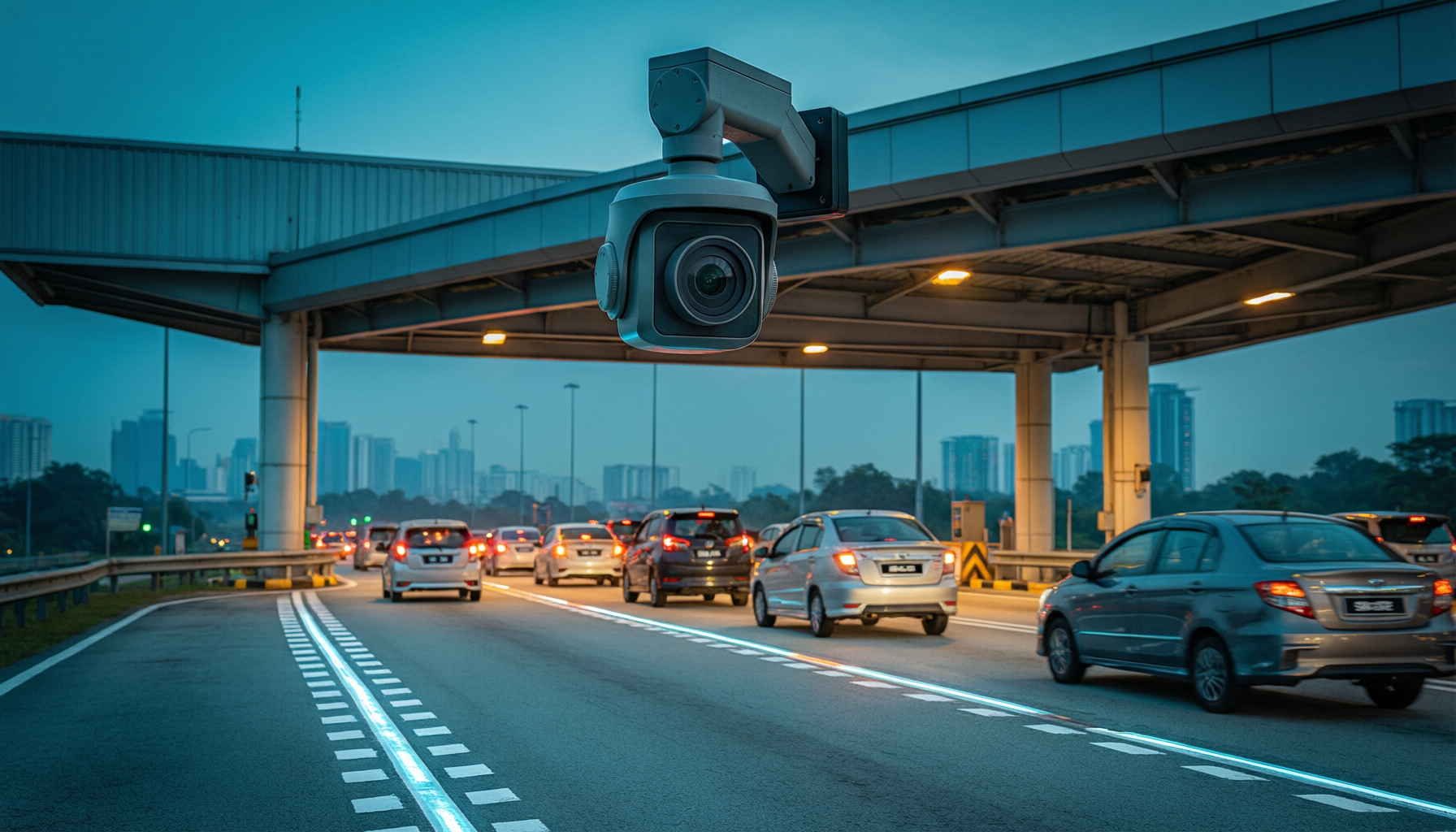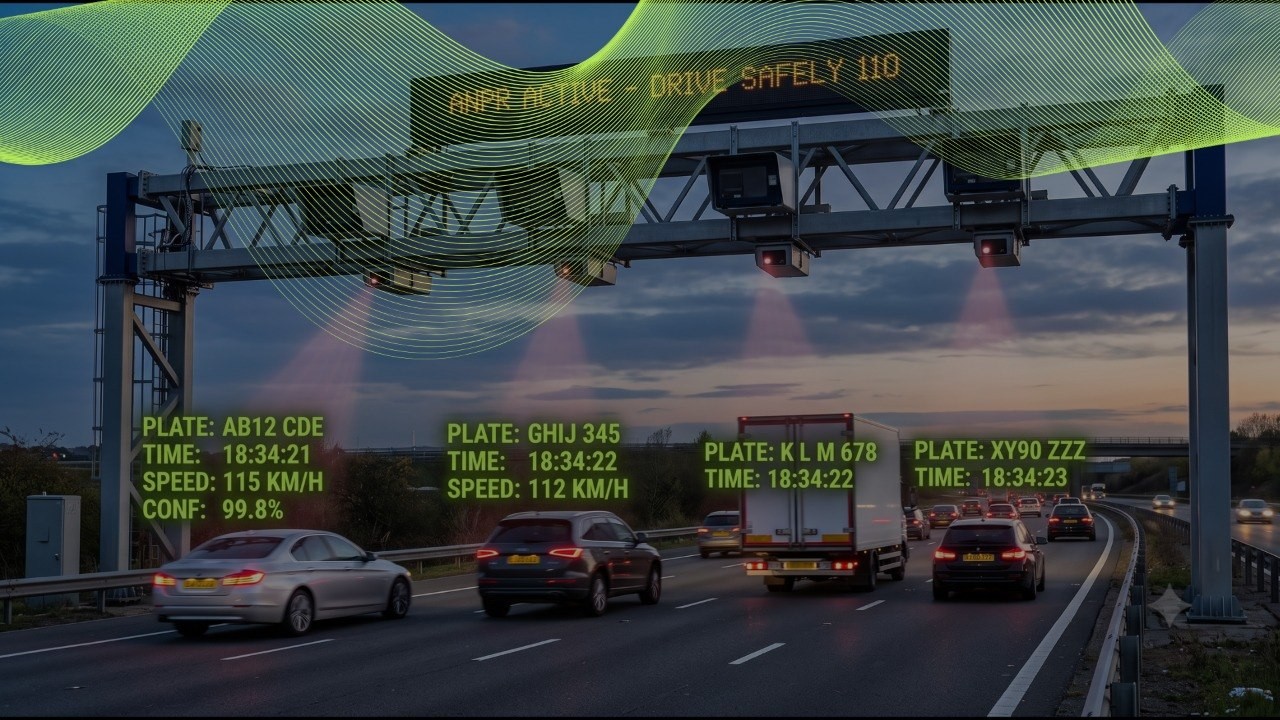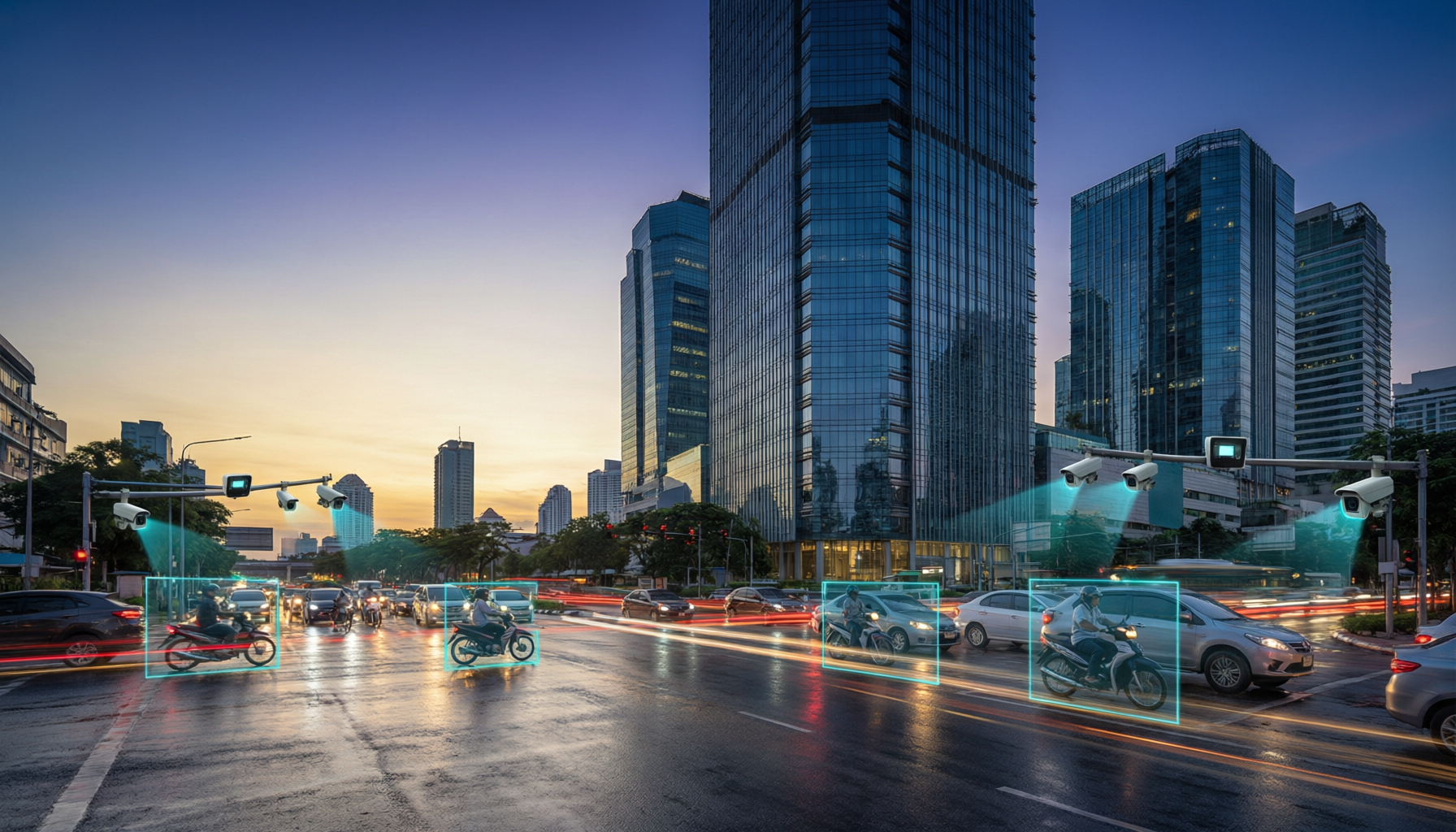
The intelligent traffic management market is worth $12.9–15.5 billion in 2026, and analysts expect it to reach $21–49 billion by the early 2030s on 10–18% annual growth. Cities are not buying cameras for their own sake. They are buying the ability to see a junction, a corridor or an expressway as a live data stream, and to change signal timing, enforcement or incident response while it still matters. AI vision — detection, number plate recognition and edge compute — is the layer that turns that stream into decisions.
Executive Summary
Traffic technology has crossed from counting vehicles to interpreting them. The 2026 numbers show double-digit market growth, compounding congestion costs, and a safety case with peer-reviewed evidence behind it. The gap between cities that can measure their roads and cities that cannot is increasingly a budget line, not a technical one.
Entity tags: AI traffic management, intelligent traffic management systems (ITMS), automatic number plate recognition (ANPR), edge AI, smart city, congestion analytics, traffic enforcement.
The Current State of AI Traffic Management in 2026
Two things changed at once: camera hardware became cheap enough to run detection at the edge, and the models became accurate enough for enforcement-grade decisions. Value shifted from the sensor to the software layer — counts, classification, plate reads, trajectories, and the rules that turn them into signal timing or a penalty notice.
Procurement looks different as a result. A conventional upgrade meant loop detectors, civil works and a fixed timing plan. A 2026 deployment more often means mounting on existing poles, streaming to a local box, and pushing events into a traffic management centre that already exists. The ANPR primer covers the plate-reading half of that stack; the expressway tolling case study covers the roadside half in production.
Regional momentum is real: Malaysia’s ITMAX said in November 2026 it will support more than 17,000 AI-traffic cameras by 2027 on Nvidia technology — a signal that Southeast Asian cities are buying the analytics layer, not just hardware.
How AI Traffic Management Is Measured
Vendors quote detection accuracy, but cities buy outcomes. The metrics that survive a procurement review are usually count accuracy by vehicle class against manual ground truth, plate read rate at and above the posted speed limit, end-to-end latency from event to alert, false alarms per camera per day, and the resulting change in delay hours, stops and crashes.
The measurement trap is the test set. A model tuned on daylight footage from a dry, well-lit arterial will not reproduce those numbers at a rain-soaked junction at midnight. Field accuracy has to be established on the operator’s own cameras for at least two weeks, across peak and off-peak, before any service-level agreement is signed. The realistic ceilings are in our 2026 accuracy benchmarks.
Industry Evidence: 2026 Traffic Management Benchmarks
The market itself is measured inconsistently, which is the first thing to know. Grand View Research puts the intelligent traffic management system market at $15.5 billion in 2026, growing 17.8% a year to $48.7 billion by 2033 (Grand View Research), while Mordor Intelligence sizes the same category at $12.89 billion in 2026 and takes it to $21.08 billion by 2031 at 10.34% (Mordor Intelligence). The gap is a definitional difference — software versus hardware versus services — and a reminder to read any single market figure as a range, not a fact.
The demand side is easier to agree on. INRIX’s 2025 Global Traffic Scorecard found Istanbul drivers lost 118 hours to congestion, up 12% year on year, while the typical US driver lost 49 hours and $894 in lost time, with Chicago at 112 hours and $2,063 per driver (ITS International). Road safety sets the other half of the case: the WHO attributes roughly 1.16 million deaths a year to road traffic and estimates crashes cost most countries 3% of GDP (WHO).
Enforcement is where the evidence has tightened. A Management Science study covering a major Chinese city estimated that AI-powered cameras at every signalised intersection would prevent about 1,190 crashes, 496 injuries or deaths and roughly $970,000 in property damage a year, without displacing risk to neighbouring junctions (LSE Department of Management).
Comparative Analysis: AI Vision vs Conventional Traffic Systems
| Capability | Conventional system | AI vision system |
|---|---|---|
| Detection basis | Inductive loops, radar or manual observation | Camera-based multi-class detection |
| Data captured | Counts, occupancy, speed | Counts, speed, class, plate, trajectory |
| Violation evidence | Trigger sensor plus a single still frame | Continuous video with plate and timestamp |
| Signal response | Fixed or calendar-based timing plans | Demand-responsive timing from live queues |
| Incident detection | Operator spots it on a wall of screens | Automatic stopped-vehicle and queue alerts |
| Retrofit cost | Civil works to cut loops and trench roads | Mounts on existing poles and cabling |
| Coverage audit | Periodic manual survey | Continuous per-lane data quality checks |
| Failure mode | Loop damage and drift go unnoticed | Occlusion, night glare and model drift |
Best Practices & Recommendations
- Start from the decision, not the camera. List the five decisions the system must improve — signal timing, incident dispatch, enforcement, planning, tolling — and buy only what serves them.
- Test on your own footage before signing. Two weeks across peak, off-peak, rain and night says more than any vendor benchmark deck.
- Instrument one corridor first. It produces comparable before-and-after numbers and exposes integration problems at a fraction of city-wide cost.
- Keep enforcement human-reviewed. Automated detection should produce evidence for a reviewer, with a visible appeal route.
- Fund the data layer. Retention, storage, integration and retraining outlast the camera warranty and are routinely unbudgeted.
- Report outcomes in delay hours and crashes avoided, not detection counts.
Limitations & Considerations
Vision degrades where the scene does: rain, glare, occlusion by buses, and roadworks that shift lane geometry. Plate reads fail on dirty or non-standard plates, which matters when a read becomes a legal notice. Personal data rules differ by jurisdiction — Malaysia’s PDPA constrains how plate images and video may be retained, and enforcement needs a lawful basis, a retention schedule and an audit trail, not just a working model. Procurement carries lock-in risk too: proprietary event formats make switching vendors expensive, so insist on exportable data.
Frequently Asked Questions
Q: How big is the AI traffic management market in 2026? A: Estimates cluster between $12.9 billion (Mordor Intelligence) and $15.5 billion (Grand View Research) for 2026, with forecast growth of 10–18% a year. The spread reflects what each analyst counts as software, hardware and services.
Q: How accurate are AI traffic cameras in practice? A: Accuracy varies with lighting, weather and camera angle, and generally lands below controlled-test figures. Count accuracy above 95% is achievable on well-mounted, well-lit lanes; plate read rates fall at speed, in rain, and on dirty or non-standard plates. Validate on your own footage.
Q: How much does an AI traffic management system cost? A: Price depends on whether you reuse existing poles and cameras, how many lanes are monitored, and whether analytics run at the edge or in a central cloud. A corridor pilot is the cheapest way to get a real per-lane figure; city-wide total cost of ownership should include connectivity, storage and retraining.
Q: Does AI traffic enforcement actually reduce accidents? A: The 2025 Management Science study found AI cameras reduced accidents near intersections without pushing risk into surrounding areas — an estimated 1,190 crashes and 496 injuries or deaths avoided per year across one city’s signalised intersections.
Q: How is this different from ANPR alone? A: ANPR reads plates. AI traffic management adds classification, trajectory, queue detection and signal or enforcement logic on top, so one camera can serve tolling, congestion measurement and incident response.
The Bottom Line: Buy the Decision Layer, Not the Camera
Traffic cameras are becoming a commodity; the durable value sits in what the system does with the stream — which signal changes, which incident gets dispatched, which violation becomes a reviewed notice. Cities that define those decisions first, then measure field accuracy and delay hours against them, get returns that survive the next procurement cycle. Request a demo →
Sources: Grand View Research, Intelligent Traffic Management System Market, 2026; Mordor Intelligence, Intelligent Traffic Management System Market, 2026; ITS International, INRIX 2025 Global Traffic Scorecard; WHO, Road Traffic Injuries; LSE, How AI Traffic Enforcement Makes Roads Safer; The Star, ITMAX AI traffic management, November 2026.