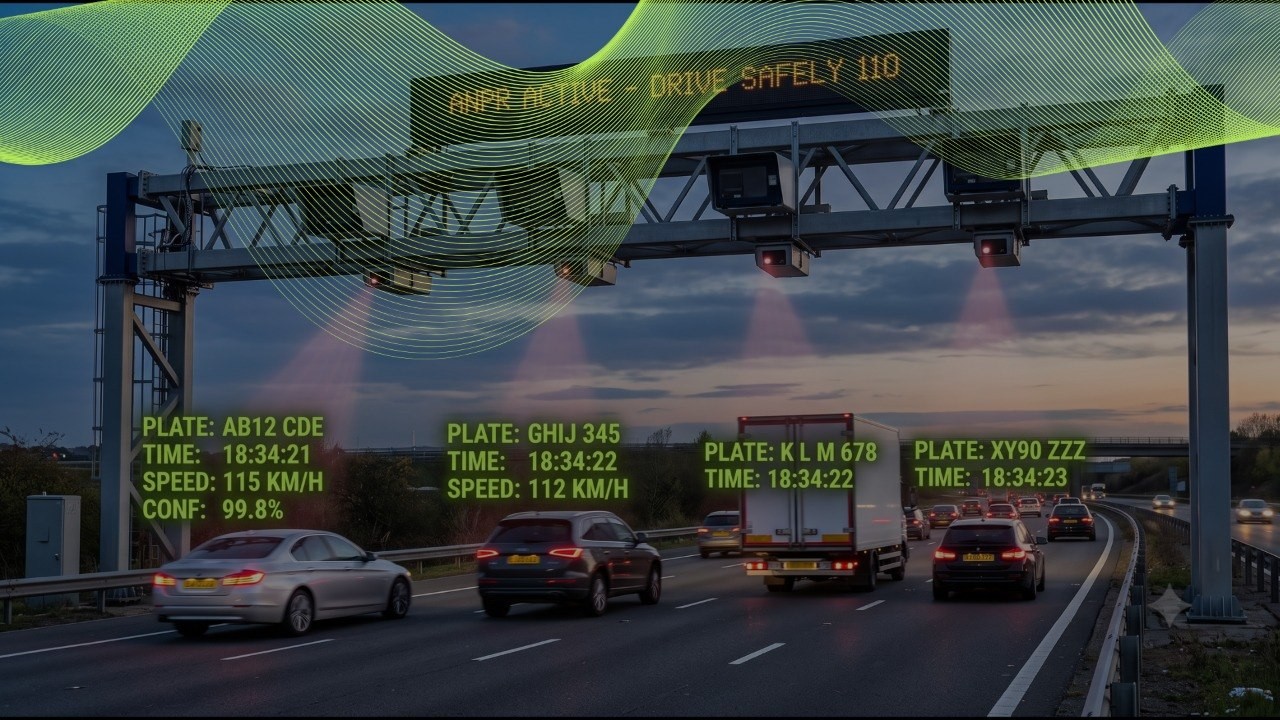
Computer vision accuracy in 2026 is three different numbers: production ALPR engines read plates at up to 99.5%, NIST measures face recognition at a fixed false-positive operating point rather than a headline score, and the strongest real-time object detector has just cleared 60 mAP on COCO. The gap between those figures and what your cameras actually see is where AI vision projects succeed or fail.
Executive Summary
Benchmarks converge at the top of the market and stay wide apart in the field: premium edge ALPR reaches 99.5% while lightweight cloud-only engines sit near 90%. Detection accuracy is saturated on public datasets, so the differentiators have moved to night, rain, angle and latency. Entity tags: ANPR | Face Recognition | Object Detection | Southeast Asia | 2026
The Current State of Computer Vision Accuracy in 2026
Fortune Business Insights forecasts the computer vision market at $24.14 billion in 2026, growing at a 14.8% CAGR to $72.80 billion by 2034. The growth comes from deployment, not new records on clean datasets: cameras with enough onboard compute to run deep-learning models at the edge, which is the difference between a 90% read rate and a 99.5% one.
Plate Recognizer’s 2026 ALPR benchmark places most vendors on one side of a wide gap: budget cloud-only engines near 90% accuracy, and deep-learning engines on-premise or on robust edge hardware at 99.5%. Roboflow’s 2026 model review reports RF-DETR as the first real-time detector past 60 mAP, with throughput-first models such as RTMDet reaching 300+ FPS.
How Computer Vision Accuracy Is Measured
Accuracy is not one metric, and vendors quoting a single number usually quote the flattering one. Detectors are scored with mean Average Precision (mAP) at an IoU threshold of 0.50:0.95 — box overlap plus classification, averaged across classes. It measures neither throughput nor a dusty plate at 30 degrees.
Recognition systems are scored on precision and recall: of the events flagged, how many were right and how many were missed. NIST’s Face Recognition Technology Evaluation publishes identification accuracy as a false negative identification rate at a threshold capping false positives at 0.003 — reflecting deployments where a false match costs more than a miss.
Latency (median and p95, frame to usable event) and accuracy under degrade decide whether a system survives production. A 2026 IEEE COINS study found OpenVINO fastest on CPU and TensorRT on GPU (arXiv 2607.11356, 2026). Fix your camera geometry first — that is what accuracy actually depends on, as our AI vision ROI benchmarks show on the cost side.
Industry Evidence: 2026 Computer Vision Benchmarks
Real-time detection ceiling: RF-DETR was the first real-time model past 60 mAP on COCO, with RTMDet at 300+ FPS (Roboflow, 2026). ALPR accuracy spread: cloud engines near 90%, deep-learning edge engines at 99.5% (Plate Recognizer 2026 ALPR Benchmark). Face recognition protocol: NIST reports FNIR at a false-positive operating point of 0.003 (NIST FRTE, 2026). Edge inference: no single framework wins both CPU and GPU (IEEE COINS / arXiv 2607.11356, 2026). Market scale: $24.14 billion in 2026 on a 14.8% CAGR to $72.80 billion by 2034 (Fortune Business Insights, 2026). For how those numbers land regionally, see AI vision in Southeast Asia.
Comparative Analysis: Edge AI vs Cloud AI Accuracy
| Dimension | Edge AI (on-camera / on-prem) | Cloud AI |
|---|---|---|
| Typical ALPR read accuracy | Up to 99.5% with deep learning | ~90% on lightweight engines |
| Detection latency | Tens of milliseconds, no network hop | Adds network + queue latency |
| Bandwidth cost | Events only, minimal egress | Full video or frame uploads |
| Night / rain robustness | IR illumination handled locally | Depends on capture quality |
| Face recognition matching | Local matching, watchlist on device | Central matching across sites |
| Failure mode | Isolated to one camera | Shared outage across sites |
| Governance | Footage stays inside the boundary | Needs retention + residency controls |
| Scaling model | Hardware per camera | Cost per stream in the cloud |
Best Practices & Recommendations
- Benchmark on your own footage. Score day, night and rain clips from your site before commercial terms — never accept a data-sheet figure.
- Fix the camera before the model. Pixels on the plate, angle and shutter speed set your accuracy ceiling; no model upgrade recovers a bad frame.
- Choose edge or hybrid by governance. On-prem keeps footage inside your boundary and satisfies regional data rules; hybrid keeps latency low.
- Ask for precision, not just recall. At your operating threshold, false positives decide whether a workflow is usable or a queue of manual reviews.
Limitations & Considerations
Every benchmark above was measured on someone else’s data. Public detection sets reward clean, well-lit images; real sites deliver motion blur, glare and country-specific plate formats — which is why an engine at 99.5% on a controlled set can read 90% of your lanes. Face recognition carries a further caveat: NIST maintains a dedicated demographic-effects evaluation because accuracy is not uniform across populations, so use should stay narrow, consented and auditable. ANPR has its own failure modes, covered in what ANPR is and how it works.
Frequently Asked Questions
Q: What accuracy should I expect from computer vision in real deployments? A: For ALPR, cloud-only engines typically land near 90%, while deep-learning engines at the edge or on-premise reach roughly 99.5% in production. For object detection and video analytics, plan on 90–98% depending on lighting, camera angle and how strictly you define a correct event.
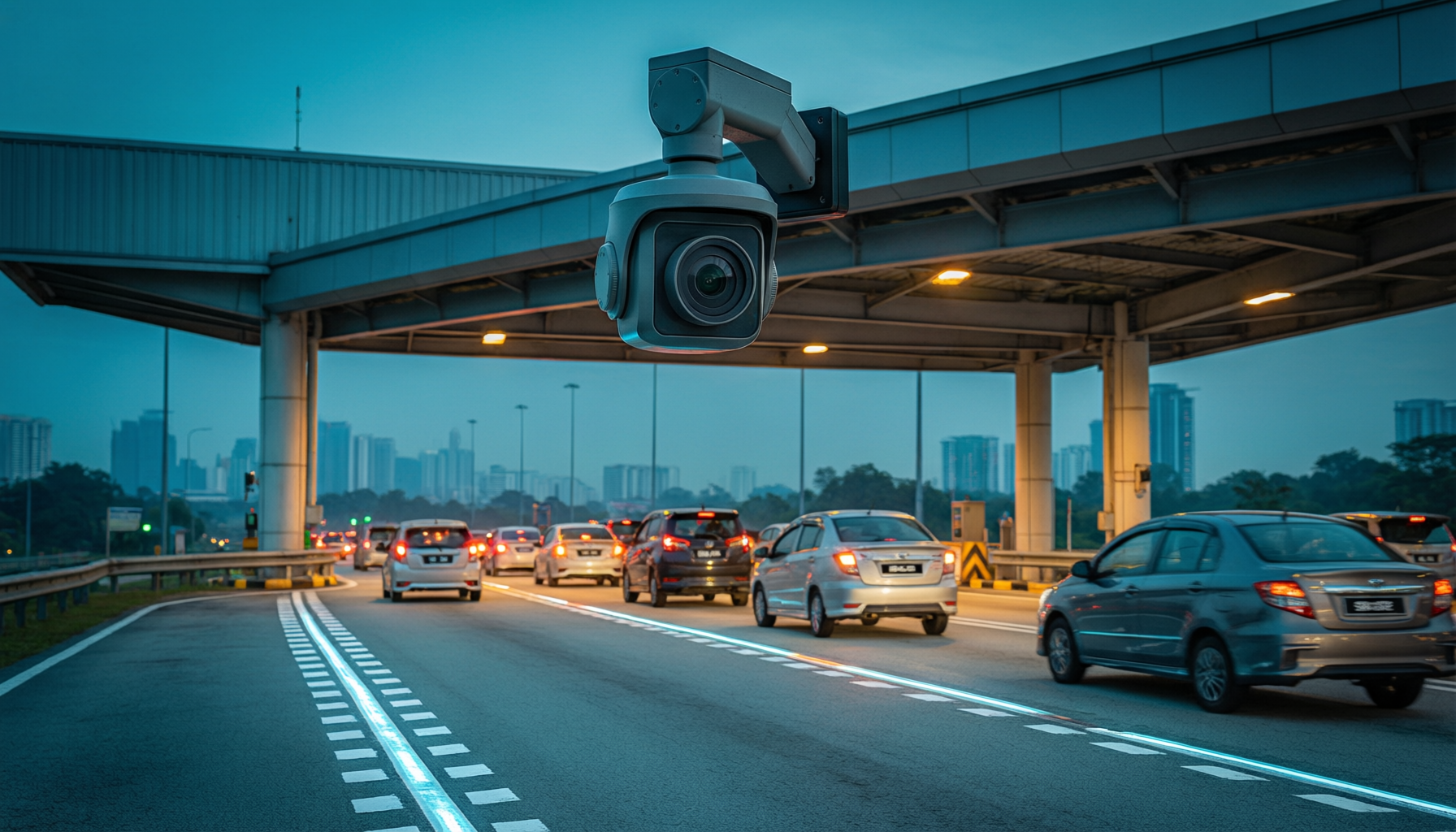
Q: Why doesn’t a higher mAP guarantee a better real-world system? A: mAP measures box overlap and classification on a fixed dataset. It says nothing about latency, night performance or camera framing, so a model that leads on COCO can still underperform on a toll gantry with the wrong geometry or illumination.
Q: Is face recognition accuracy the same for everyone? A: No. NIST runs a dedicated demographic-effects evaluation showing accuracy varies across demographic groups, and reports results at a fixed false-positive threshold. Deployments should be narrow, consented and auditable.
The Bottom Line: Benchmarks Only Matter When They Survive Your Camera Angle
Detection models are past 60 mAP in real time, deep-learning ALPR reaches 99.5% on real streams, and face recognition is measured under a strict false-positive threshold. None of that tells you whether your lanes, plate formats or lighting pass the same test. Bring your own footage and the benchmark stops being a claim and becomes your baseline. Request a demo →
Sources: NIST FRTE 1:1 and 1:N evaluations (2026) · Roboflow Best Object Detection Models (2026) · Plate Recognizer ALPR Benchmark (2026) · Fortune Business Insights, Computer Vision Market (2026) · IEEE COINS / arXiv 2607.11356 (2026)