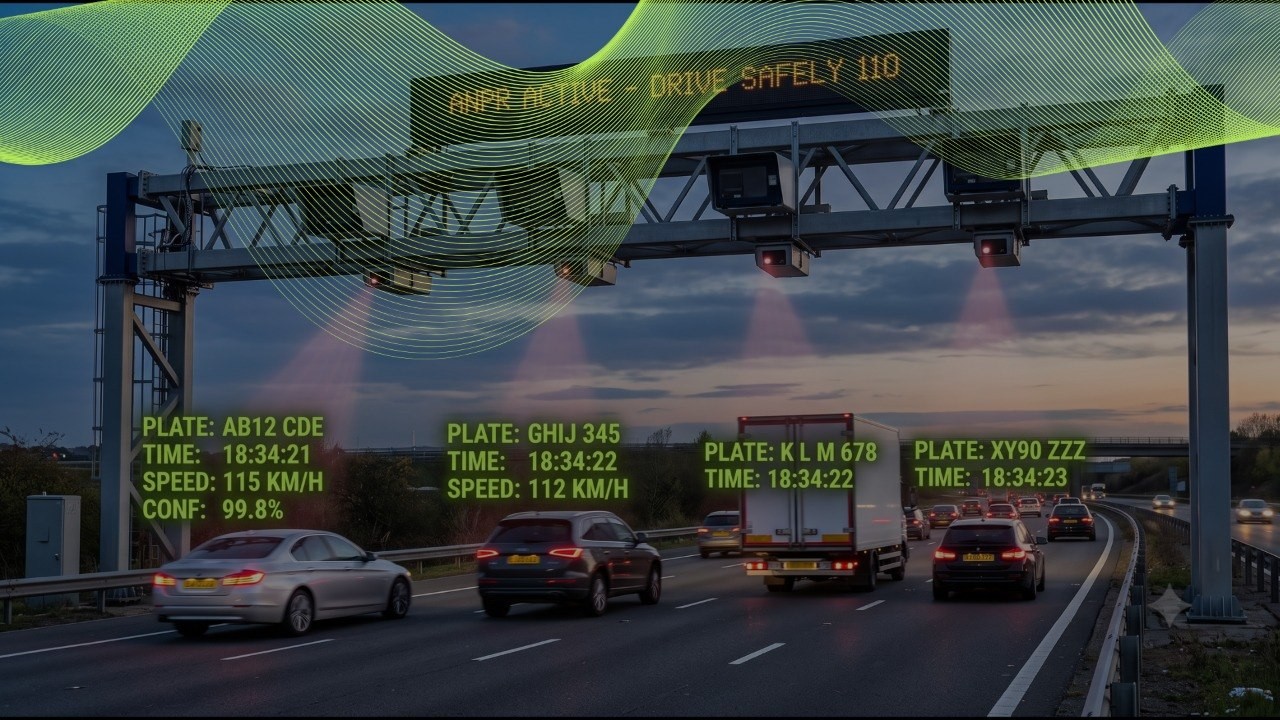
Automatic Number Plate Recognition (ANPR) uses AI-powered cameras and optical character recognition to automatically read vehicle license plates in real time, converting images into actionable data for tolling, parking, security, and traffic management. Unlike manual plate checks, ANPR processes thousands of vehicles per hour with 98%+ accuracy — without slowing traffic.
- ANPR reads plates in real time via AI cameras and OCR, day, night, rain, or glare.
- One ANPR lane handles 3,000+ vehicles per hour vs 120-180 with manual checks.
- 70% of toll roads globally now use ANPR-based electronic toll collection.
- ANPR powers free-flow tolling, barrier-free parking, and 24/7 security screening.
How ANPR Works
ANPR systems follow a four-stage pipeline that transforms a passing vehicle into searchable data — all in under a second.
Step 1 — Image Capture
High-speed cameras with infrared (IR) illumination capture the vehicle’s front or rear plate. IR ensures clear images regardless of lighting conditions — day, night, rain, or glare. Modern ANPR cameras capture at 200+ km/h with zero motion blur.
Step 2 — Plate Localization
AI algorithms scan the image to isolate the license plate region, filtering out bumpers, grilles, and background noise. Deep learning models trained on millions of plates from different countries handle varied formats, fonts, and plate conditions.
Step 3 — Optical Character Recognition (OCR)
The localized plate image is processed through OCR engines that convert pixel patterns into alphanumeric characters. Modern systems use neural network-based OCR that handles dirty plates, partial obstructions, and non-standard fonts with 98%+ character-level accuracy. The output is a clean plate number string.
Key Data Points
- 98.5% accuracy: Modern AI-powered ANPR achieves over 98.5% plate read accuracy in real-world conditions (Source: ITS International, 2025).
- $4.2B market: The global ANPR market is projected to reach $4.2 billion by 2028, growing at 10.2% CAGR (Source: MarketsandMarkets, 2025).
- 3,000+ plates/hour: A single ANPR lane can process over 3,000 vehicles per hour — vs. 120–180 with manual checks (Source: IRF, 2024).
- 70% of toll roads globally now use ANPR-based electronic toll collection, up from 42% in 2019 (Source: IBISWorld, 2025).
- <1 second: End-to-end ANPR processing — from image capture to plate output — takes under 1 second per vehicle.
Real-World Examples
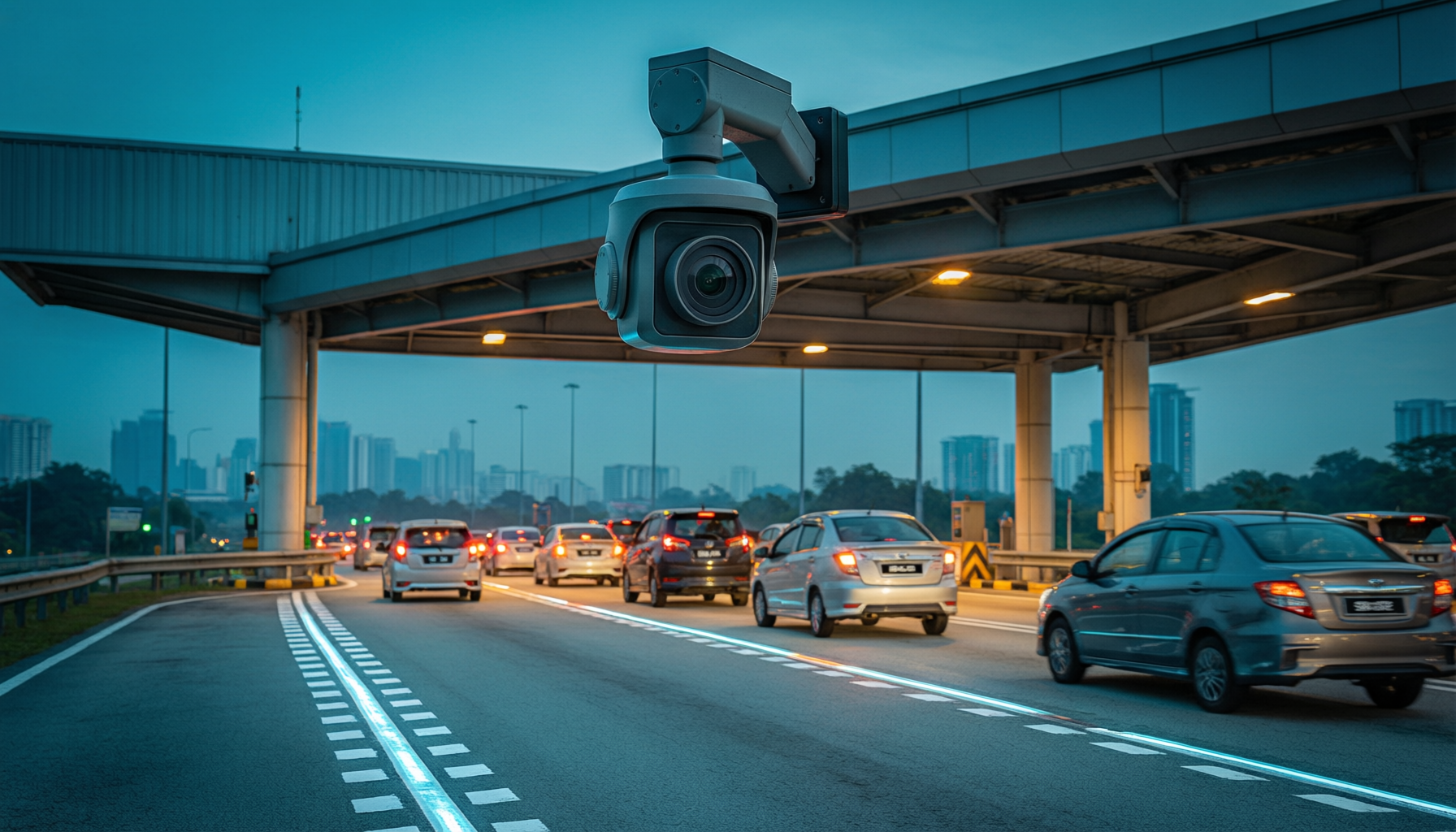
1. Electronic Toll Collection Highway operators use ANPR to eliminate toll booths entirely. Cameras mounted on gantries read every plate at highway speed, billing drivers automatically. Malaysia’s highway network uses ANPR for multi-lane free-flow tolling with Tapway’s VehicleTrack platform — processing thousands of vehicles per lane per hour without stopping traffic.
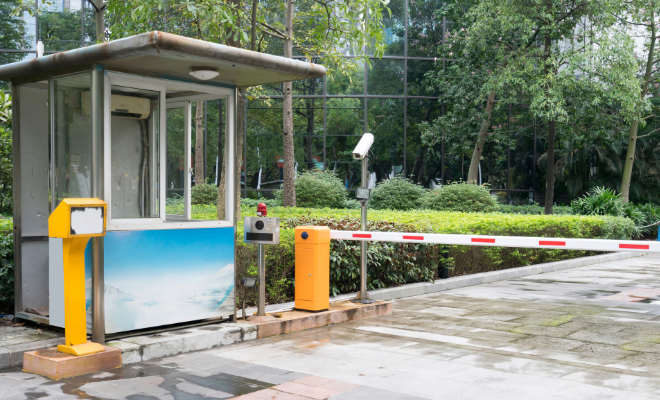
2. Smart Parking Management ANPR enables barrier-free parking: the system reads plates on entry and exit, calculates duration automatically, and processes payment. No tickets, no QR codes, no friction. Major malls and airports across Southeast Asia use ANPR-based parking to reduce entry wait times by 80% and eliminate lost ticket disputes.
3. Law Enforcement & Security Police vehicles equipped with mobile ANPR can scan hundreds of plates per patrol, cross-referencing against databases of stolen vehicles, expired registrations, or wanted persons in real time. Fixed ANPR cameras at city entry points create a security perimeter that operates 24/7 without fatigue.
Related: How AI vision delivers measurable ROI in manufacturing quality inspection.
ANPR vs. Traditional Plate Checks
| Feature | Manual Plate Checks | AI-Powered ANPR |
|---|---|---|
| Throughput | 120–180 vehicles/hour | 3,000+ vehicles/hour |
| Accuracy | Variable (fatigue, lighting) | 98.5%+ in all conditions |
| Speed | Vehicle must stop/slow | 200+ km/h, no slowdown |
| Night operation | Requires bright lighting | Built-in IR illumination |
| Data integration | Manual entry, errors | Auto-logged with timestamp + image |
| Cost per lane | Ongoing staffing cost | One-time hardware, near-zero opex |
FAQ
Q: Can ANPR read dirty or damaged plates? A: Yes. Modern AI-based ANPR handles moderate dirt, partial obstructions, and minor plate damage. Accuracy degrades below ~85% for severely obscured plates, but this accounts for less than 2% of real-world reads.
Q: Does ANPR work with plates from different countries? A: Yes, but the system must be trained on each country’s plate format. Tapway’s VehicleTrack supports Malaysian, Singaporean, Indonesian, and Thai plate formats out of the box, with new countries added via model updates.
Q: Is ANPR legal under privacy regulations? A: Yes, when used for legitimate purposes (tolling, parking, security). ANPR captures license plates — not faces or personal identifiers. Data retention policies and encryption ensure compliance with local privacy laws like Malaysia’s PDPA.
The Bottom Line
ANPR has moved from niche law enforcement tool to essential infrastructure across tolling, parking, and security. With 98%+ accuracy, sub-second processing, and the ability to handle thousands of vehicles per hour, AI-powered ANPR delivers ROI measured in months. As cities and highway operators modernize, ANPR is no longer optional — it is the standard.
Source: ITS International
AI Vision in Southeast Asia: $25.7B Market by 2030
August 3, 2026
How AI Video Analytics Are Transforming Physical Retail
July 30, 2026
How Does Fruit Grading Automation Work with Computer Vision?
July 28, 2026
The ROI of AI Vision: 2026 Industry Benchmarks & Statistics
July 23, 2026