Computer Vision Manufacturing: The Complete 2026 Guide
 7 minutes read
 16/07/26
 Tapway
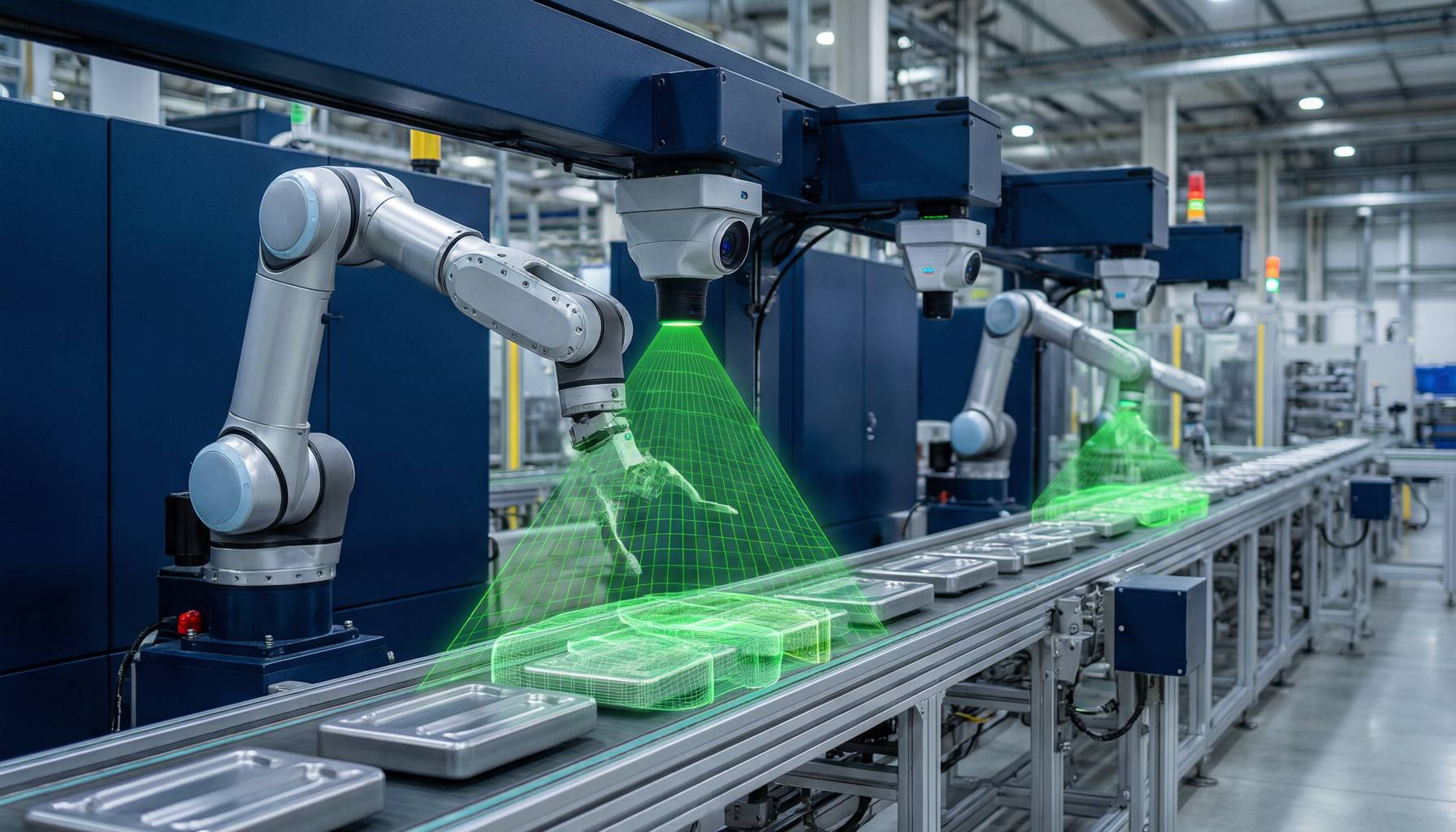
Computer vision manufacturing is reshaping how factories operate in 2026. With the global market projected to grow from $24 billion to over $72 billion by 2034, manufacturers are racing to adopt AI-powered inspection, predictive maintenance, and safety systems. Yet many still rely on manual quality checks that miss up to 20% of defects. This guide breaks down everything you need to know — from how the technology works to real-world use cases, ROI data, and implementation steps.
Why Computer Vision Manufacturing Matters Now
AI adoption in manufacturing jumped from 47% in 2024 to 76% in 2026, driven largely by quality control and predictive maintenance applications. Labor shortages, rising defect costs, and supply chain pressures are forcing factories to automate visual inspection at scale. Companies that delay risk falling behind competitors already achieving 90–95% defect detection accuracy with AI vision systems.
What Is Computer Vision Manufacturing?
 Computer vision manufacturing refers to the use of AI-powered cameras and algorithms to inspect, monitor, and analyze production processes in real time. Unlike traditional machine vision, which relies on fixed rules and templates, modern systems use deep learning models that adapt to new defect types, lighting conditions, and product variations without reprogramming. This makes them ideal for high-mix, low-volume production environments where flexibility is critical.
How It Works
The process follows four key steps:
(1) Image Capture — high-resolution cameras capture product images at production line speed.
(2) Preprocessing — algorithms normalize lighting, remove noise, and align images for analysis.
(3) AI Inference — deep learning models classify defects, measure dimensions, and flag anomalies in milliseconds.
(4) Action — the system triggers alerts, sorts products, or adjusts machinery automatically, closing the loop without human intervention.
Key Benefits of Computer Vision Manufacturing
Manufacturers implementing AI vision systems report measurable improvements across quality, efficiency, and safety. The three use cases below illustrate how different industries apply this technology to solve real production challenges — from catching microscopic defects to preventing equipment failures before they happen.
Use Case 1 — Quality Control & Defect Detection
AI vision inspection systems now achieve 90–95% defect detection accuracy compared to 70–80% for human inspectors. One manufacturer documented a 37% defect reduction, 85% fewer customer complaints, and 374% three-year ROI with 7–8 month average payback. Tesla’s Gigafactories use AI vision to inspect 100% of battery cells, catching defects human inspectors missed 12% of the time. See more AI vision ROI benchmarks →
Use Case 2 — Predictive Maintenance
AI cameras monitor equipment visually — detecting vibration patterns, wear on conveyor belts, and surface anomalies on machinery components. By catching issues early, manufacturers reduce unplanned downtime by up to 50% and extend equipment lifespan. Gartner forecasts that 25% of manufacturing organizations will adopt AI-augmented industrial automation, with vision-based predictive maintenance as a primary use case.
Use Case 3 — Worker Safety & PPE Compliance
AI cameras continuously monitor factory floors for safety violations — missing hard hats, unsafe proximity to machinery, or restricted zone entry. Unlike periodic safety audits, these systems provide 24/7 enforcement without additional staffing. This reduces workplace incidents and ensures compliance with occupational safety regulations. Learn more about hazard recognition from OSHA →
Computer Vision Manufacturing: Industry Data & Stats
$24B → $72B — The computer vision market is projected to grow from $24 billion in 2026 to over $72 billion by 2034 (InferenceLabs, 2026).
28.5% — Manufacturing accounts for 28.5% of all computer vision deployments by end-user industry, making it the largest sector (InferenceLabs, 2026).
76% — AI adoption in manufacturing reached 76% in 2026, up from 47% in 2024 (Toxigon, 2026).
37% — Plants using AI vision systems report 30–40% defect reduction with 99%+ detection accuracy (Rock & River, 2025).
6–12 months — Average ROI payback period for AI vision systems in manufacturing (Overview AI, 2025).
How Tapway Helps
Tapway’s SamurAI platform brings edge AI vision to factory floors with deployment in weeks, not months. Edge processing means inspections run on-device — no cloud latency, no data leaving your facility. Pre-trained models for defect detection, PPE compliance, and safety monitoring work out of the box, with fine-tuning for your specific product line. Real-time dashboards give production managers live visibility into defect rates, equipment health, and safety compliance. Explore more AI vision solutions →
Real Results
Manufacturers using Tapway’s AI vision systems have achieved up to 95% defect detection accuracy on production lines, reducing scrap rates by 30% and cutting inspection time by 60%. One automotive parts supplier reported full ROI within 8 months of deployment, with zero unplanned downtime events in the first quarter of operation.
Getting Started
Implementing AI vision systems doesn’t require a complete production line overhaul. Start with a single inspection point — identify your highest-defect-rate station and deploy a pilot system there. Measure the results for 30 days, then scale to additional stations. Ready to see how this technology can transform your operations? Request a demo now →