How Does Fruit Grading Automation Work with Computer Vision?
 5 minutes read
 29/07/26
 Tapway Team
AI Fruit Grading Automation
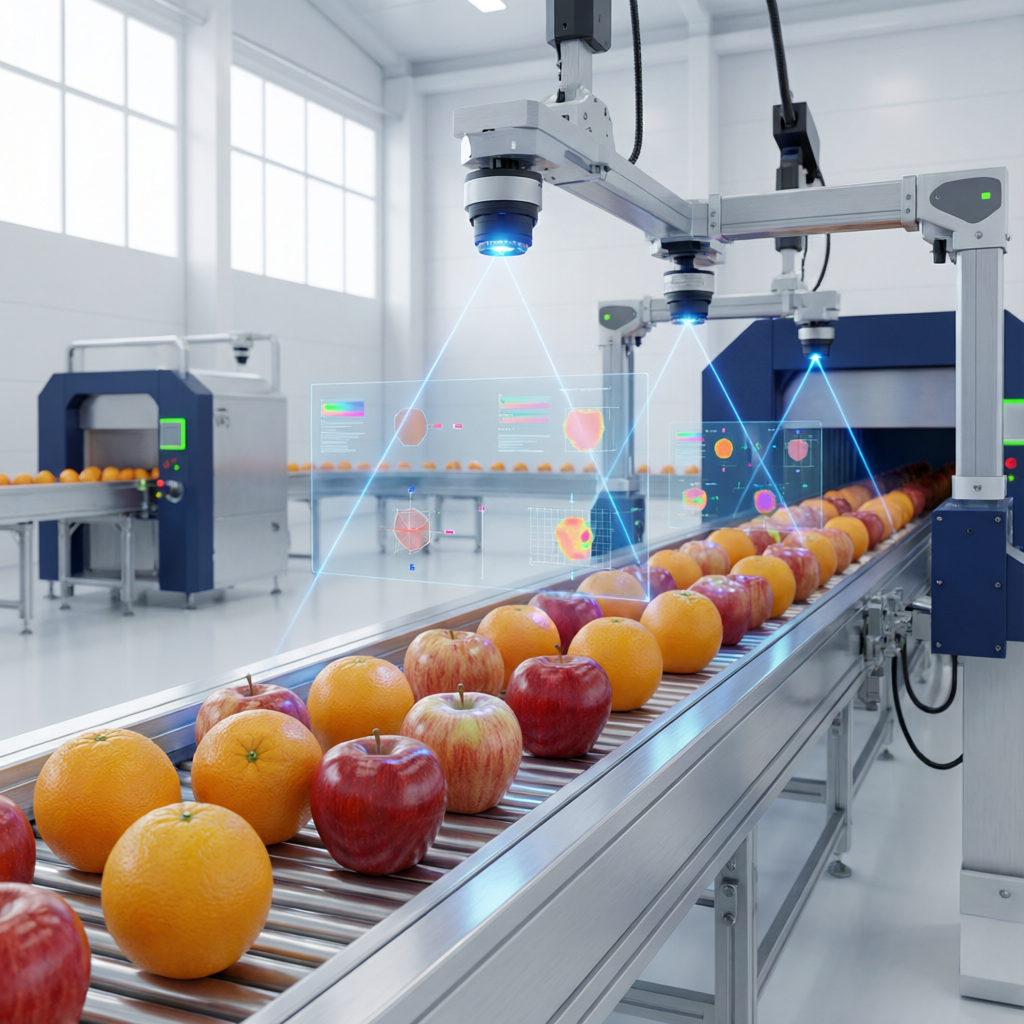
Fruit grading automation uses computer vision — high-speed cameras paired with AI deep learning models — to inspect, sort, and grade fruits by size, colour, shape, and defects at speeds far beyond human capability. These systems capture hundreds of images per second on conveyor lines, analyse them with convolutional neural networks (CNNs), and classify each fruit into premium, processing, or reject grades in real time. The result: consistent quality, reduced waste, and lower labour costs. Explore more AI vision insights on our blog.
How AI Fruit Grading Works
AI-powered fruit grading systems combine multispectral cameras, deep learning models, and edge computing to transform standard sorting lines into intelligent quality control stations. The process begins with image capture from cameras mounted above conveyor belts — these detect surface colour, shape, and using near-infrared light, internal defects invisible to the human eye. AI models trained on millions of labelled fruit samples analyse each image in milliseconds, identifying early bruising, skin imperfections, colour variations, size deviations, and even early decay. When a defect is detected, the system triggers automated sorting mechanisms that route each fruit to its appropriate grade in real time, while logging every decision with timestamp and image evidence for traceability. Learn more about Tapway’s quality inspection solutions.
Step 1 — High-Speed Multi-Angle Image Capture
Step 2 — AI Model Detection & Classification
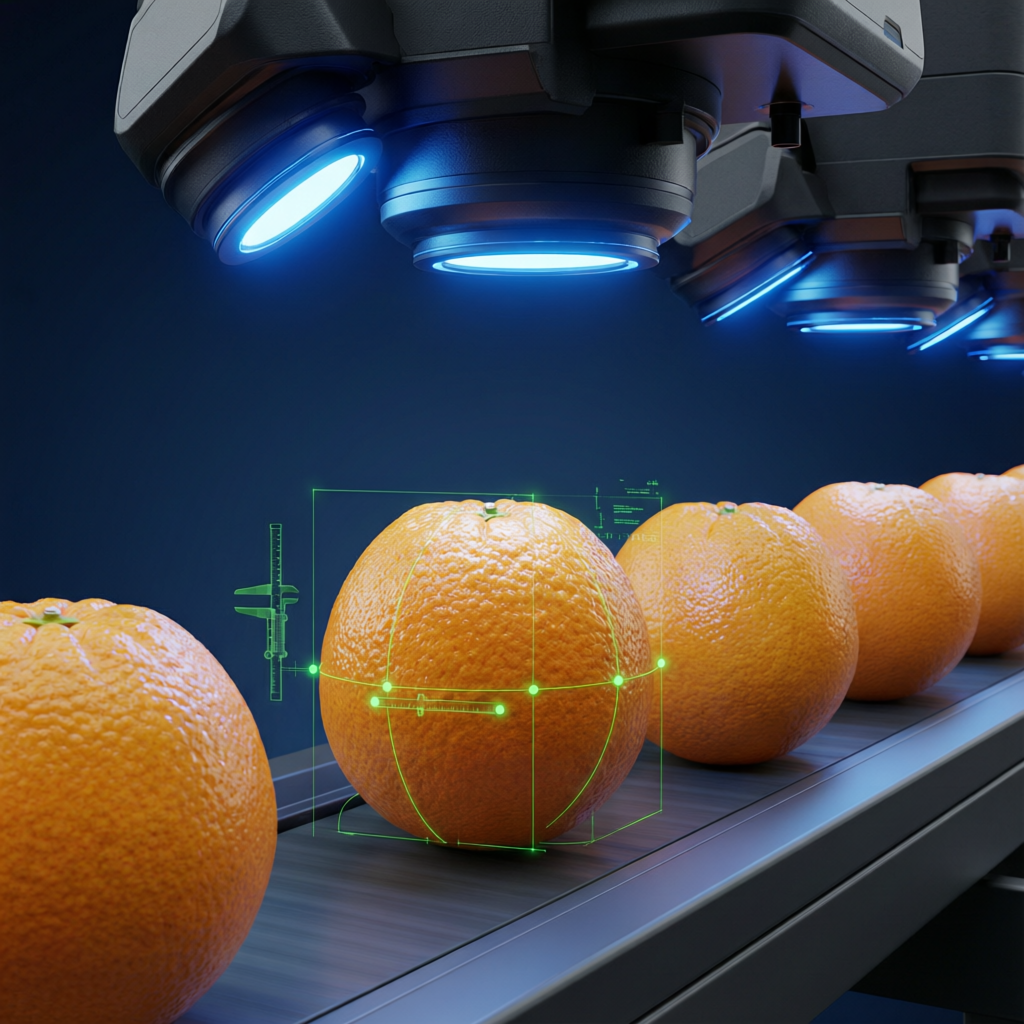
Convolutional neural networks (CNNs) trained on millions of labelled fruit samples analyse each image in milliseconds. The AI identifies patterns indicating quality issues: skin imperfections, colour deviations, size anomalies, and early-stage decay. Unlike rule-based machine vision systems, CNNs learn defect patterns automatically from training data and improve over time.
Step 3 — Real-Time Grading & Automated Sorting
Each fruit is assigned a grade — premium, processing, or reject — and routed to the appropriate packaging line via pneumatic or mechanical sorting mechanisms. The system processes thousands of fruits per minute, maintaining consistent quality standards across entire shifts without fatigue or variability.
AI Fruit Grading: Key Data Points
98% defect detection accuracy — deep CNN models achieved 98% accuracy for mango defect detection, far exceeding manual inspection consistency (PMC/NIH study, 2022). 30% accuracy drop — human inspector accuracy declines by up to 30% after just 2 hours of repetitive sorting, while AI systems maintain consistent performance across entire shifts (Foodman, 2026). 50-70% labour cost reduction — automated grading lines reduce sorting labour by 50-70%, with payback periods typically under 18 months (industry benchmarks, 2025). Thousands of cartons daily — AI vision systems sort thousands of cartons per day without fatigue or inconsistency, far exceeding manual throughput (TraxTech, 2025).
Traditional vs. AI-Powered Grading
| Feature | Manual Grading | AI Vision Grading |
|---|---|---|
| Accuracy | Declines 30% after 2 hours | Consistent 95–98% all shift |
| Speed | Limited by human dexterity | Hundreds of fruits per second |
| Defect Detection | Surface-level visible only | Surface + internal (NIR), early decay |
| Consistency | Varies between sorters | Identical standards every time |
| Traceability | Subjective notes | Timestamped images + quality scores |
AI Fruit Grading FAQ
- Q: Can AI vision systems handle soft fruits without damage?
A: Yes. Modern systems use non-contact imaging and soft-roller conveyor belts designed specifically for delicate berries and stone fruits, minimising bruising during inspection. - Q: How accurate is AI fruit grading compared to manual inspection?
A: AI systems achieve 95–98% accuracy, compared to human accuracy that declines significantly with fatigue. A study on mango defects using deep CNNs reported 98% accuracy (PMC/NIH, 2022). - Q: Can these systems adapt to different types of produce?
A: Yes. Modern AI vision systems are trained on diverse datasets and can be retrained for new fruit varieties, seasonal changes, and evolving quality standards. The same hardware switches between apples, citrus, berries, and stone fruits with software reconfiguration.
- Q: Can AI vision systems handle soft fruits without damage?
The Bottom Line
Fruit grading automation with computer vision is transforming quality control from a subjective, labour-intensive process into an objective, high-speed, data-driven operation. With 98% accuracy, internal defect detection, and consistent 24/7 performance, AI grading systems are becoming essential for modern agricultural supply chains. Ready to see how AI vision can transform your quality inspection? Request a demo now →
Sources: PMC/NIH (2022) · Foodman (2026) · TraxTech (2025) · Industry Benchmarks (2025)


