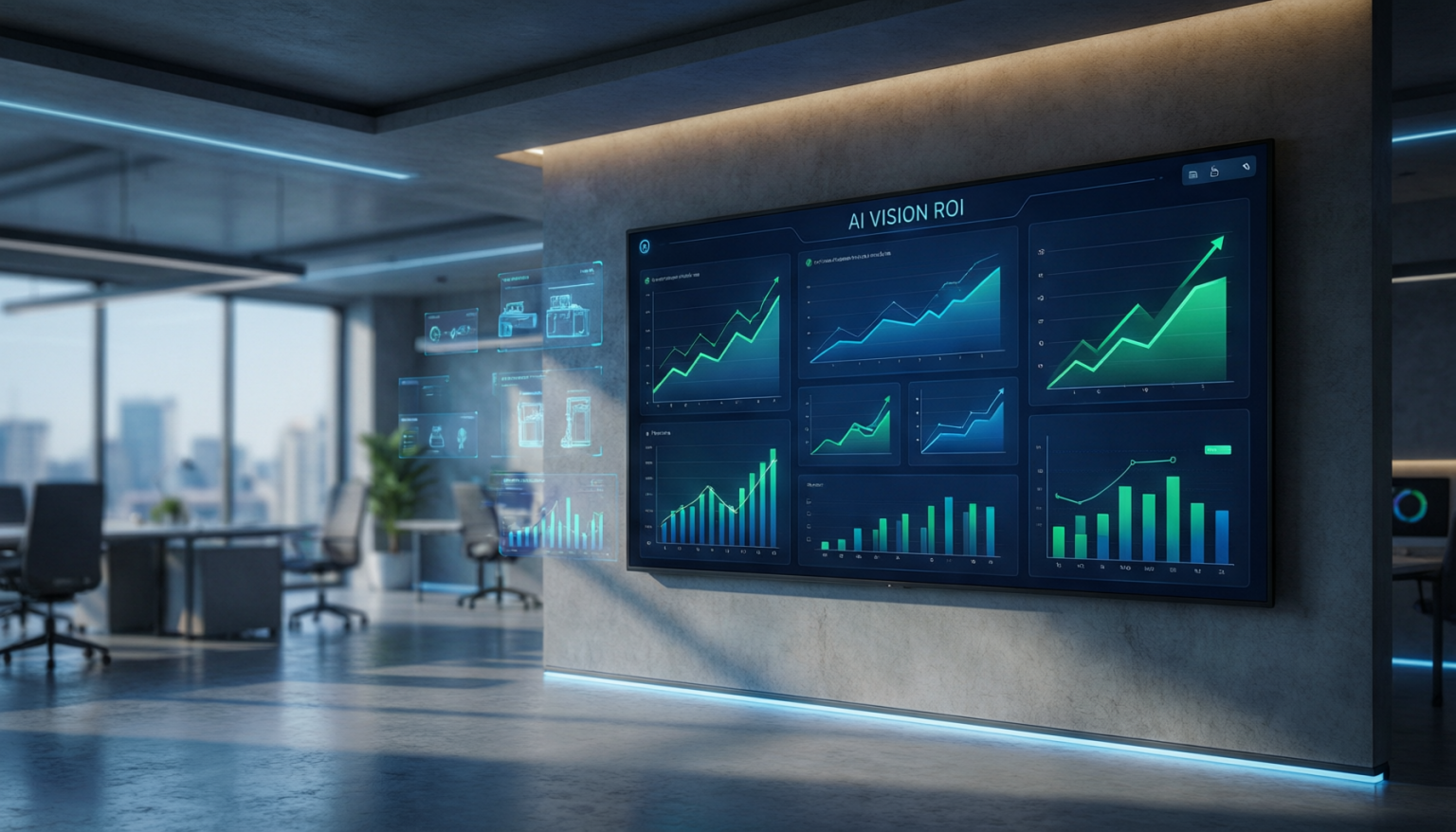
The ROI of AI Vision: 2026 Industry Benchmarks & Statistics

📖 7 minutes read

🗓️ 23/07/26

👤 Tapway

Executive Summary

AI vision ROI has emerged as the defining metric for enterprises evaluating computer vision investments in 2026. The global computer vision market, valued at USD 19.82 billion in 2024, is projected to reach USD 58.29 billion by 2030 at a 19.8% CAGR, according to Grand View Research. Yet despite 84% of manufacturers reporting measurable AI value (Deloitte, 2026), only one in five use cases has been scaled beyond a single site. This gap between pilot and production is where the ROI decision is ultimately made.

The Current State of AI Vision ROI

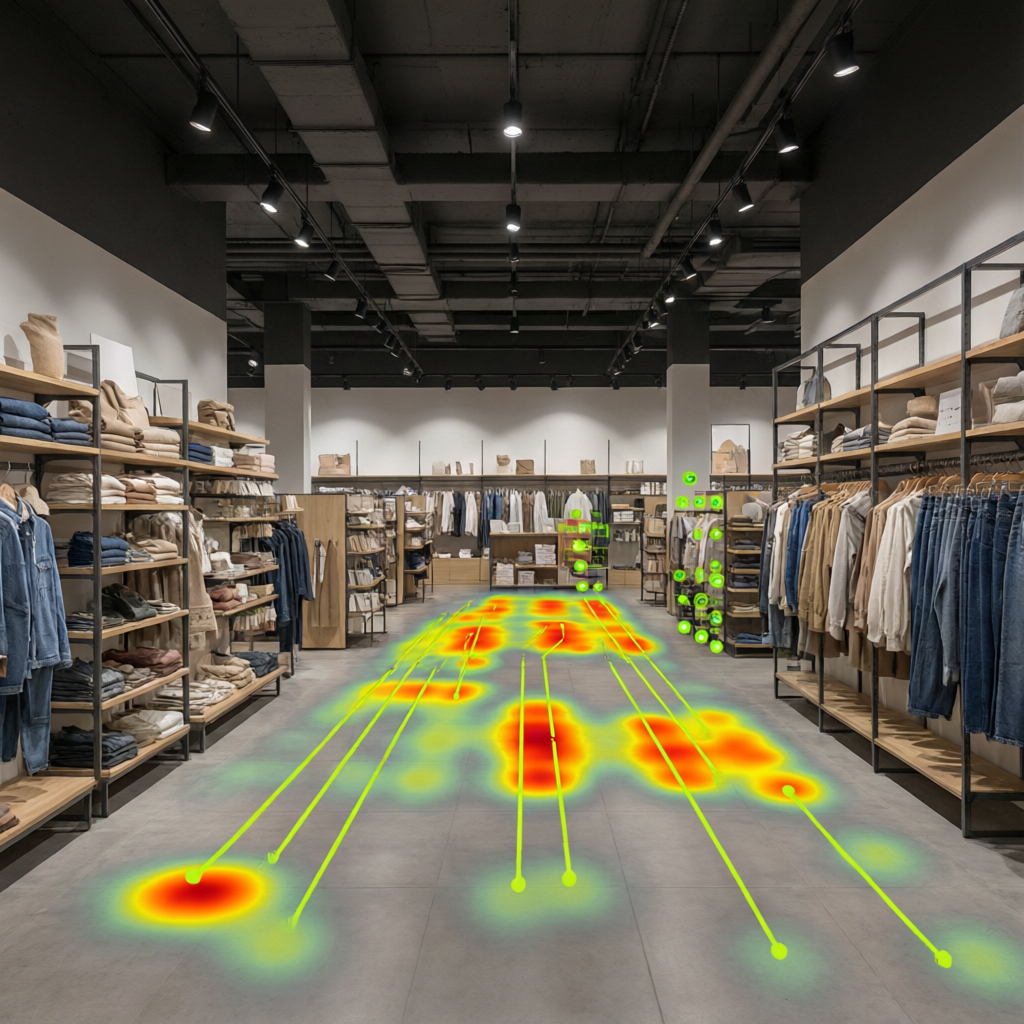
AI vision ROI in retail video analytics

According to Grand View Research (2024), the global computer vision market was valued at USD 19.82 billion in 2024 and is projected to reach USD 58.29 billion by 2030, growing at a 19.8% CAGR from 2025 to 2030. The hardware segment dominated with over 71% of global revenue, driven by demand for smart cameras, processors, and imaging sensors. Asia Pacific held the largest regional share at 42.1%, while North America emerged as the fastest-growing market.

Separately, MarketsandMarkets (via Axis Intelligence, 2025) reports the broader AI in manufacturing market at USD 34.18 billion in 2025, projected to reach USD 155.04 billion by 2030 at a 35.3% CAGR. McKinsey’s State of AI 2025 survey found that 88% of organizations now use AI in at least one business function, up from 78% a year earlier. However, Deloitte’s 2026 survey of 140+ manufacturers reveals that while 84% generate measurable value from AI, only 20% of use cases have been scaled enterprise-wide. This scaling gap represents the single greatest barrier to realizing computer vision ROI at industrial scale.
Key Definitions

Computer Vision: A field of artificial intelligence that enables machines to interpret and analyze visual data from cameras and sensors, performing tasks such as object detection, facial recognition, and defect inspection.

AI Vision ROI: The financial return on investment from deploying AI-powered computer vision systems, measured through cost savings, revenue gains, operational efficiency improvements, and risk reduction relative to implementation costs.

Edge AI: Artificial intelligence processing that occurs on local devices (cameras, edge servers) rather than in the cloud, reducing latency and bandwidth requirements for real-time vision applications.

How AI Vision ROI Is Measured

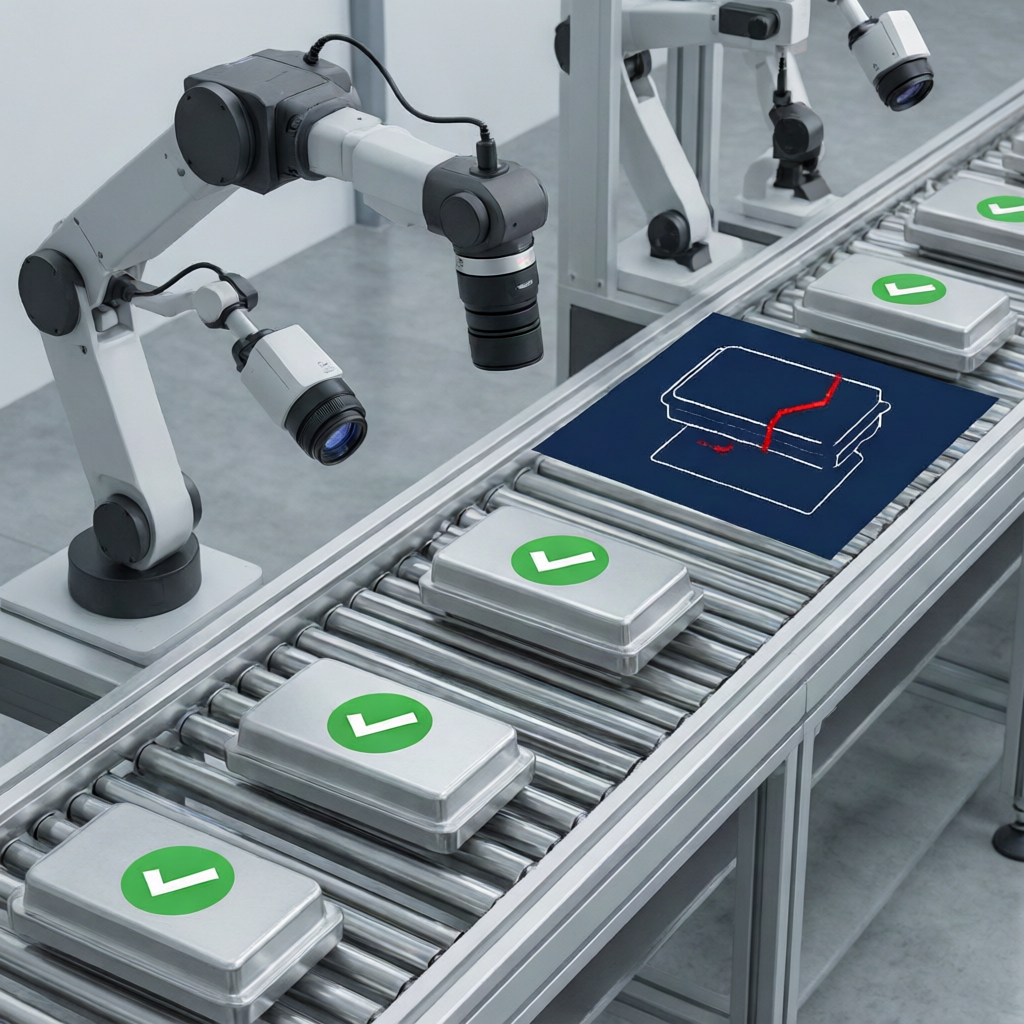
AI vision ROI in manufacturing quality inspection

The ROI of AI vision is calculated by comparing the total cost of ownership of a computer vision deployment against the financial benefits it generates. The cost side includes hardware (cameras, edge servers, GPUs), software licenses, model training, integration, and ongoing maintenance. The benefit side encompasses direct cost savings (reduced labor, fewer defects, lower shrink), revenue gains (improved conversion, optimized merchandising), and risk mitigation (compliance, safety incidents prevented).

For manufacturing, AGMIS (2026) reports that AI-powered quality inspection achieves up to 99% defect detection accuracy versus 80-85% for human inspectors, processing units 27 times faster at roughly 30 times lower cost per inspection. For retail, Insight (2025) estimates that a 500-store chain deploying AI vision for loss prevention, stockout reduction, and layout optimization can generate USD 3 million in shrink reduction, USD 37 million in recovered stockout sales, and USD 65 million in incremental merchandising revenue annually.

Architecture / Processing Pipeline

The typical AI vision pipeline follows three stages: Input — cameras capture video or image streams from the operational environment (production line, retail floor, parking facility). Processing — edge AI appliances or cloud servers run trained neural network models (typically CNNs, YOLO, or transformer architectures) to detect, classify, and track objects in real time. Output — structured data and alerts are sent to dashboards, POS systems, or ERP integrations, triggering automated actions such as restocking alerts, quality flags, or security notifications. Edge processing reduces latency to milliseconds and keeps sensitive visual data on-premises, while cloud processing handles model updates and aggregate analytics.

Industry Evidence: Computer Vision Benchmarks

Stat 1: USD 19.82B to USD 58.29B — Grand View Research (2024) — The global computer vision market is projected to nearly triple by 2030, driven by automation demand across manufacturing, retail, and security sectors.

Stat 2: 84% vs 20% — Deloitte (2026) — 84% of manufacturers report measurable AI value, but only 20% have scaled use cases enterprise-wide, highlighting the deployment gap that limits AI vision ROI realization.

Stat 3: 99% vs 80-85% — AGMIS (2026) — AI quality inspection achieves 99% defect detection accuracy versus 80-85% for human inspectors, at 27x the speed and 30x lower cost.

Stat 4: USD 105M potential — Insight (2025) — A 500-store retail chain can generate USD 3M in shrink reduction, USD 37M in stockout recovery, and USD 65M in layout optimization annually through AI vision.

Stat 5: USD 1.4 trillion — Siemens (2024) — Unplanned downtime costs the world’s 500 largest companies USD 1.4 trillion annually, making AI-driven predictive maintenance one of the highest-ROI vision applications.

Comparative Analysis: AI Vision vs Traditional Methods

The AI vision advantage over traditional methods is most visible in inspection, monitoring, and analytics workflows. Traditional approaches rely on human inspectors, manual spot checks, or basic motion-triggered cameras — all of which suffer from fatigue, inconsistency, and limited scalability.

DimensionTraditional MethodsAI Vision Systems
Inspection accuracy80-85% (degrades with fatigue)Up to 99% (consistent 24/7)
Processing speed1 unit per 60 seconds1 unit per 2.2 seconds (27x faster)
Cost per inspectionHigh (labor + overhead)~30x lower at scale
ScalabilityLinear headcount increaseSoftware-defined, multi-site deploy
Data outputManual logs, limited granularityStructured real-time analytics

Sources: AGMIS (2026), Insight (2025), Grand View Research (2024).

Best Practices & Recommendations

  1. Start with one use case. Begin with a single high-impact application (e.g., defect detection or loss prevention) and prove return on investment before scaling to additional sites.
  2. Choose edge processing for real-time needs. Edge AI reduces latency to milliseconds and keeps sensitive data on-premises, while cloud handles model updates and aggregate analytics.
  3. Invest in data quality. Model accuracy depends on training data diversity. Capture images across lighting conditions, angles, and defect types before deployment.
  4. Measure TCO, not just license cost. Include hardware, integration, maintenance, and training in ROI calculations. The 20% scaling gap (Deloitte, 2026) often stems from underestimating integration effort.
  5. Plan for multi-site scaling from day one. Architect for centralized model management and distributed edge deployment to avoid pilot-to-production stagnation.

Limitations & Considerations

Return on investment is not guaranteed. Edge cases — unusual lighting, rare defect types, or adversarial inputs — can reduce model accuracy below acceptable thresholds. Initial deployment costs for hardware and integration can be substantial, and ROI timelines typically range from 12 to 24 months depending on use case complexity and scale. Organizations in regulated industries must also address data privacy and compliance requirements, particularly when deploying facial recognition or people-counting systems. Human oversight remains essential for high-stakes decisions; AI vision excels at augmenting, not replacing, human judgment.

The Bottom Line: The AI Vision ROI Imperative

The data is clear: computer vision is transitioning from experimental technology to operational infrastructure. With the market projected to reach USD 58.29 billion by 2030 and demonstrated accuracy improvements of 14-19 percentage points over human inspection, the ROI question is no longer speculative but a competitive necessity. Organizations that close the scaling gap — moving from pilot to enterprise deployment — will capture disproportionate value. Ready to see how AI vision can transform your operations? Request a demo now →